
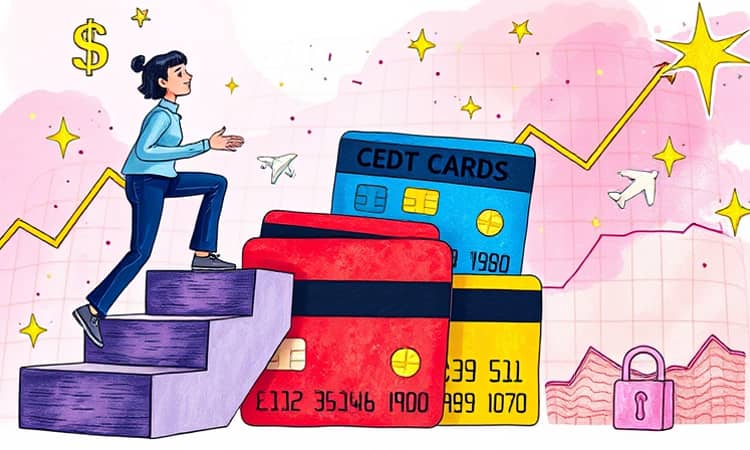
Embarking on a credit card journey can feel overwhelming, whether you’re opening your first account or fine-tuning an advanced rewards strategy. With the right guidance, you can navigate every stage confidently, build strong credit, and maximize benefits without falling into costly pitfalls.
Credit Card Basics & How They Work
Understanding the fundamental mechanics of credit cards empowers you to make informed decisions. At its core, a credit card is a revolving line of credit offered by a lender, complete with a predetermined credit limit based on income and history.
Key terms to keep in mind include:
Credit limit: The maximum you can borrow at any given time.
APR (Annual Percentage Rate): The cost of carrying a balance, expressed as an annual rate.
Minimum payment: The smallest amount due each cycle to keep your account in good standing.
Major networks like Visa, Mastercard, Discover, and American Express process transactions but do not issue you credit; banks and credit unions do.
For Beginners: Getting Your First Card
The first credit card is a milestone toward financial independence. To establish positive history and avoid early missteps, focus on simplicity and safety.
- Choose a student or secured card to start with minimal approval requirements.
- Opt for a no annual fee option to reduce costs while building credit.
- Keep utilization below 30% of your limit—spend less than $300 on a $1,000 limit.
- Set up auto-pay to avoid late fees and protect your score.
- Always pay more than the minimum—and pay in full if possible to dodge interest.
Here are two standout entry-level cards:
- Discover it® Student Cash Back: No annual fee, 5% cash back on rotating categories, and credit-building tools for students.
- Capital One QuicksilverOne: Earns cash back even with fair credit, with a modest annual fee to kickstart your rewards journey.
Building Credit: Responsible Habits
Once you’ve secured your first card, cultivate habits that strengthen your credit profile over time. On-time payment history makes up 35% of your FICO score, so pay on time, every time.
Avoid carrying high balances—keeping utilization low demonstrates fiscal responsibility. When your score improves, consider requesting a credit limit increase, but only if you’re immune to the temptation of extra spending.
Intermediate: Maximizing Rewards and Benefits
At the intermediate stage, you’re ready to unlock more lucrative rewards and perks. Identify whether cash back, points, or miles align best with your lifestyle.
- Capital One Savor Cash Rewards: 3% cash back on groceries, dining, and entertainment.
- Capital One Quicksilver: Flat 1.5%–5% cash back on all purchases, plus a $200 welcome bonus and 0% intro APR for 15 months.
- Chase rewards cards offering 3% on dining and select categories with no annual fee and robust point ecosystems.
Look for 0% intro APR periods of 12–21 months if you plan a large purchase or want to consolidate debt via balance transfers. Always track bonus spending requirements to claim welcome offers efficiently.
Advanced: Pro-Level Credit Card Strategies
Pros know how to align every purchase with the perfect card and timing. Start by matching your highest spending categories—travel, dining, groceries—with cards that reward them most generously.
Implement a reward stacking strategy: use one card for rotating bonus categories, another for everyday purchases, and a specialized travel card for flights and hotels. Combine points across programs like Chase Ultimate Rewards, Amex Membership Rewards, and Citi ThankYou to amplify value.
Leverage features beyond rewards: utilize trip cancellation insurance embedded in premium cards, enjoy airport lounge access, and avoid foreign transaction fees on international travel. When transferring balances, pay down the debt before the promo period ends to prevent steep interest hikes.
Common Pitfalls & How to Avoid Them
Even seasoned cardholders can stumble if they let convenience overshadow discipline. The most frequent errors include paying only the minimum due—this extends debt for years and incurs hefty interest.
Be vigilant about hidden costs: late fees, cash advance fees, balance transfer charges, and annual fees can erode rewards. Never inflate spending to chase points; your long-term financial health means more than a temporary bonus.
Finally, monitor promo deadlines. Transitioning from a 0% APR to a high variable rate of 18%–29% without a payoff plan can be a costly misstep.
Monitoring & Improving Your Credit Health
Regular reviews of your credit report help you spot errors or fraud early. Federal law entitles you to a free annual report from each bureau; stagger them to review every four months.
Track your score through reputable apps or card issuers’ dashboards. If inaccuracies appear, dispute them promptly to preserve your reputation as a reliable borrower. Incremental improvements can unlock offers for premium cards with higher thresholds.
Key Numbers and Industry Context
Keeping core metrics in mind ensures smart decision-making:
Credit utilization under 30% maintains optimal scoring.
Variable APRs in 2025 range from 18% to 29%, depending on creditworthiness and market rates.
Welcome bonuses typically sit around $200 cash back or 75,000 points/miles for mid-tier cards after meeting spending thresholds.
Introductory APR offers usually span 12–21 months before reverting to standard rates.
Expert Tips at Every Stage
Below is a side-by-side comparison of goals, strategies, and recommended cards for each level of experience.
Additional Resources & Next Steps
To further refine your credit card approach, explore online comparison tools that filter by spending habits, rewards rates, and annual fees. Free credit report services and monitoring apps keep you informed of sudden changes in your profile.
As your score climbs, seek invitations to premium products offering lounge access, elite travel status, and robust insurance protections. Continuous learning and disciplined habits translate your credit card from a simple payment tool into a powerful instrument for financial growth.