
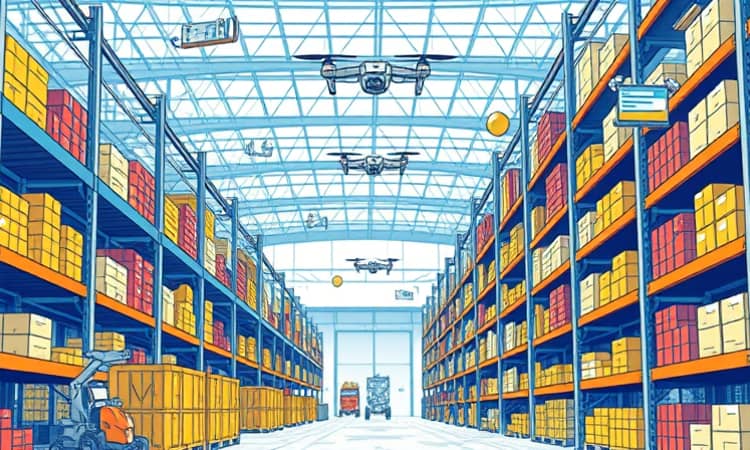
Effective inventory management isn’t just about knowing what’s on your shelves—it’s about striking the perfect balance between supply and demand, reducing carrying costs, and ensuring customer satisfaction. In today’s fast-paced market, precision-driven stock strategies can transform your bottom line and give your business a significant competitive edge.
Why Inventory Optimization Matters
Inventory often accounts for a substantial portion of an organization’s assets—sometimes up to 35%. Mismanaged stock can tie up precious capital, inflate storage fees, and lead to missed sales opportunities. Conversely, having items on hand when customers need them fosters loyalty and repeat business.
- Cost is tied up in unsold goods, representing a significant share of assets.
- Stockouts erode customer loyalty with up to 43% order loss.
- Optimized stock cycles drive competitive edge with higher turnover rates.
Current Trends Shaping Inventory Management
As of 2025, inventory management is evolving rapidly. Companies are adopting next-generation technologies and strategies to stay ahead of the curve, from hyper-localized stock planning to sustainability-driven practices.
- Personalized inventory strategies leveraging advanced data analytics.
- Real-time analytics and automation through AI, IoT, and machine learning.
- Cloud-native platforms for remote, collaborative stock management.
- Inventory-as-a-Service to outsource routine inventory tasks.
- Sustainability initiatives focused on waste reduction and green practices.
- Agile supply chains responsive to market fluctuations.
Essential Techniques for Stock Optimization
Deploying proven methods ensures you maintain the right product mix at the right time. Integrating data-driven approaches reduces human error and refines your ordering processes.
- Demand forecasting with machine learning algorithms for more accurate predictions.
- Safety stock optimization based on lead time variability and demand uncertainty.
- Economic Order Quantity (EOQ) to balance ordering and holding costs.
- ABC analysis to segment and prioritize high-impact items.
- Cycle counting routines to maintain inventory accuracy and reduce shrinkage.
- Reorder point formulas to trigger timely replenishment.
Technologies Powering Modern Inventory Optimization
Automation and connectivity form the backbone of today’s inventory solutions. From barcode scanners and RFID tags to fully autonomous warehouse robots, technology accelerates operations and sharpens visibility.
Cloud-native systems enable real-time collaboration across teams and geographies. They seamlessly integrate with ERP, CRM, and e-commerce platforms, providing a unified view of stock levels, order statuses, and supplier performance.
Advanced Strategies for Profit Optimization
Beyond core techniques, advanced models like Vendor-Managed Inventory (VMI) and Just-in-Time (JIT) further compress costs and lead times. With VMI, suppliers assume responsibility for stocking agreed levels at your location, reducing administrative overhead and accelerating replenishment.
JIT aims to receive goods exactly when needed, slashing holding costs. However, it demands highly reliable supply chains and responsive logistics—making it ideal for organizations with strong supplier partnerships and robust contingency plans.
Inventory Metrics and KPIs
Tracking the right metrics is essential for continuous improvement. Use real-time dashboards to monitor performance and identify areas for refinement.
Implementation Best Practices
Executing inventory optimization requires disciplined processes and ongoing oversight. Start by establishing regular cycle counts and audits to verify data integrity and detect discrepancies early.
Invest in staff training and standardized procedures to minimize manual entry errors. Foster transparent supplier relationship management—collaboration with vendors can dramatically improve replenishment reliability and cost negotiations.
Challenges & Pitfalls
Even with advanced systems, common obstacles persist. Overstocking drains cash flow and raises holding costs, while stockouts yield unsatisfied customers and lost revenue. Disparate systems create data silos, impeding clear decision-making and eroding supply chain visibility.
Resilience is paramount—plan for disruptions by incorporating buffer strategies, alternate suppliers, and demand-flexible agreements. Regularly review performance metrics to catch warning signs before they escalate.
Case Studies & Future Outlook
Leading retailers have reported transformative gains: one global brand increased inventory turns from 4 to 9 by combining automation with ABC analysis. Another firm cut carrying costs by 22% after moving to a cloud-native platform and implementing AI-powered demand forecasts, boosting service levels from 89% to 97%.
Looking ahead, predictive analytics and AI-driven recommendations will further refine forecast accuracy. Sustainability will remain a driving force—companies will optimize stock strategies to minimize environmental impact through recycled packaging, waste tracking, and green logistics initiatives.
By embracing these innovations and adhering to best practices, organizations can unlock significant profit potential and build a truly resilient, future-ready supply chain.